Valve Strengthens AI Disclosure Rules on Steam as Epic Games CEO Pushes Back

Tim Sweeney Continues Public Criticism of AI Labeling Policies
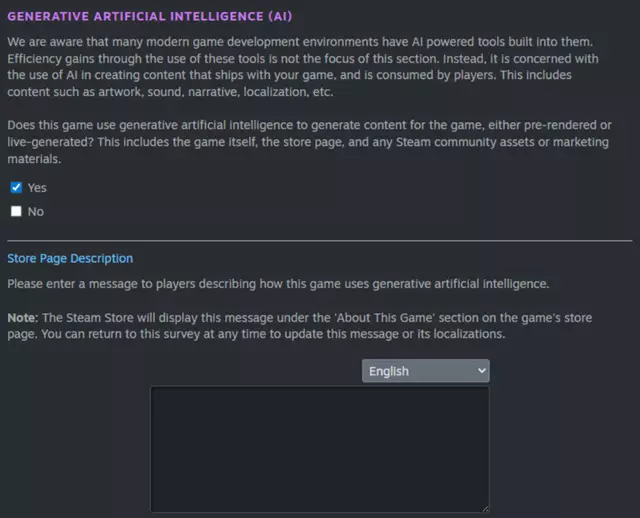
Valve has once again become a focal point in the ongoing debate surrounding AI usage in game development after updating its AI content disclosure form for developers publishing games on Steam. The update is designed to clearly define which types of AI usage must
be disclosed to consumers and which are considered standard development tools.
As expected, the move quickly drew attention from Tim Sweeney, CEO of Epic Games, who responded publicly with criticism in his characteristic sarcastic tone.
Clearer Guidelines for Developers
Valve’s updated disclosure form addresses long standing confusion among developers regarding the scope of AI reporting. Many studios questioned whether common tools such as Generative Fill in Adobe Photoshop or AI assisted code generation from tools like Claude should be declared as AI usage.
In response, Valve clarified that it understands modern game development environments frequently include AI assisted tools by default. These general productivity tools are not the primary focus of disclosure. Instead, the company is targeting content directly generated by AI, ensuring players are informed when AI created assets, text, or other materials are included in a game.
The update reflects Valve’s effort to balance developer workflow realities with consumer transparency.
Tim Sweeney’s Renewed Opposition
Following the announcement, Tim Sweeney responded on social media with a familiar joke comparing AI disclosure to forcing developers to reveal which brand of shampoo they use. The comment was intended as satire, suggesting that such disclosures are unnecessary and excessive.
However, the remark failed to gain significant traction online, especially when contrasted with Valve’s stated goal of improving clarity for buyers who care about how game content is created.
Sweeney’s stance is consistent with his previous comments from late last year, when he argued that AI labels should be abandoned entirely, claiming AI would eventually be embedded in nearly every aspect of game development.
Market Confidence and Industry Context
Industry analysts suggest Valve’s confidence in implementing consumer focused policies stems from Steam’s extremely strong revenue position. Reports indicate that Steam’s revenue in December alone surpassed the entire annual third party game revenue of the Epic Games Store in 2023.
Epic Games Store reportedly generated approximately USD 950 million in revenue during that year, highlighting the gap between the two platforms’ market influence and financial stability.
Community Response Favors Transparency
Online sentiment has largely supported Valve’s approach, with many players stating that clear disclosure is a basic consumer right. Transparency around AI generated content allows buyers to make informed decisions about the products they support.
Meanwhile, critics suggest that Epic Games may benefit more from focusing on improving its storefront user experience rather than continuing to publicly mock competitors with stronger market positions.
For those curious about how the updated rules are applied, Steam now clearly displays AI related disclosures under the AI Generated Content Disclosure section on applicable game pages.
Source: GamingBible