Valve Tightens AI Content Screening on Steam as Tim Sweeney Pushes Back

Epic Games CEO Continues Ongoing Criticism of AI Disclosure Policies
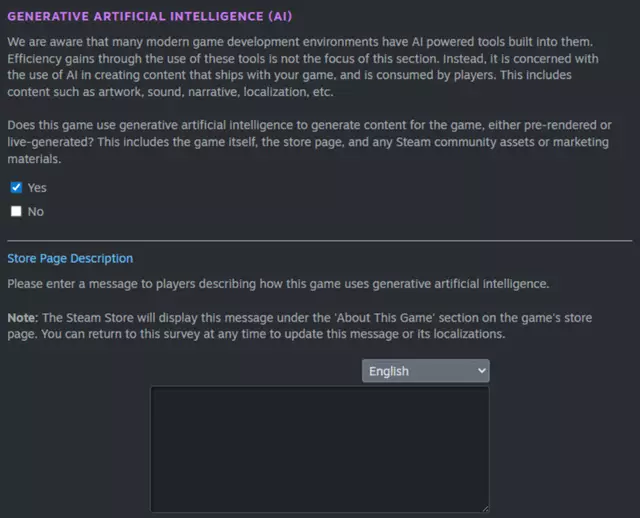
Valve has once again become a focal point within the global game development community after updating its AI content disclosure form for developers planning to release games on Steam. The move aims to clearly define which types of AI usage must be disclosed to consumers and which are considered standard development tools, reducing ambiguity for studios of all sizes.
As expected, the update did not go unnoticed by Tim Sweeney, CEO of Epic Games, who quickly weighed in with renewed criticism consistent with his long-standing opposition to AI labeling requirements.
Valve Clarifies What Counts as AI Content
Valve acknowledged that modern game development environments now commonly include AI-assisted tools by default. Examples raised by developers include features such as Generative Fill in Adobe Photoshop or short code assistance from AI models like Claude.
In response, Valve clarified that these general-purpose productivity tools are not the primary focus of disclosure. Instead, the policy targets content that is directly generated by AI, ensuring players are informed when in-game assets, visuals, or other materials originate from generative systems rather than traditional human creation.
Tim Sweeney Responds with Sarcasm
Following the update, Tim Sweeney reacted on social media using a familiar sarcastic tone. He joked that if AI usage must be disclosed, developers might as well be required to list the brand of shampoo they use, suggesting that such disclosures are unnecessary and excessive.
The comment echoed his previous remarks from late last year, when he argued that AI would inevitably become part of nearly every step in game development, making labeling pointless in the long run. However, this response received limited positive reaction compared to Valve’s attempt to increase transparency for consumers.
Financial Strength Shapes Platform Strategy
Industry analysts note that Valve’s confidence in enforcing consumer-focused policies is supported by Steam’s exceptionally strong financial performance. Reports indicate that Steam generated more revenue in December alone than the Epic Games Store did throughout all of 2023.
The Epic Games Store reportedly earned approximately USD 950 million in total revenue last year, highlighting the significant gap between the two platforms and helping explain Valve’s ability to prioritize disclosure policies without immediate commercial risk.
Community Response Favors Transparency
Online discussion has largely sided with Valve, with many players arguing that clear disclosure about AI-generated content is a basic consumer right. In contrast, Tim Sweeney has faced suggestions that his time might be better spent improving Epic Games Store usability rather than publicly criticizing a platform that continues to dominate the PC digital marketplace.
Players who want to see how the updated rules are applied can now find relevant details directly on Steam under each title’s AI Generated Content Disclosure section.
Source: GamingBible