Razer Confirms Project Ava Is Not a Core Business Strategy, Focuses on AI Assistant for Gamers

Min-Liang Tan, CEO of gaming hardware giant Razer, has confirmed that Project Ava is not intended to become a core business product for the company. Speaking in an exclusive interview with The Verge during CES 2026, Tan discussed Razer’s expanding involvement in artificial intelligence and clarified misconceptions surrounding its latest AI driven projects.
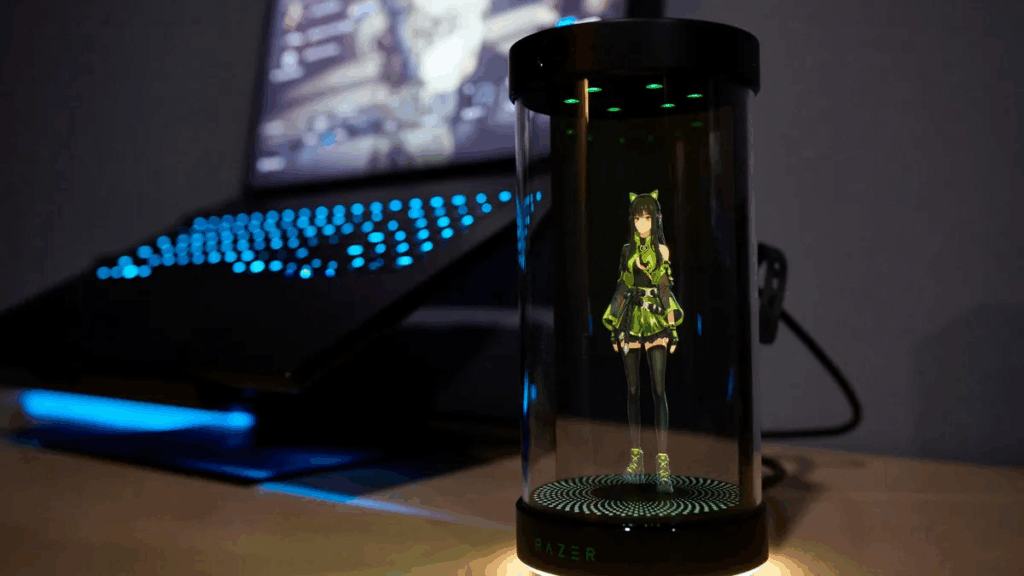
The spotlight of the discussion was Project Ava, a 5.5 inch 3D holographic AI assistant designed to sit on a desktop. The device has drawn widespread attention from the tech media, with some outlets informally labeling it an “anime waifu in a jar” due to its customizable anime style characters. Tan emphasized that Razer has no intention of encouraging emotional dependency or inappropriate relationships between users and AI.
Project Ava and Its Design Philosophy
Project Ava is an evolution of Razer’s AI Esports Coach system introduced last year. It takes the form of a cylindrical hardware device capable of projecting holographic characters such as Kira, a cat eared anime styled assistant, or even esports icons like Faker.
The device is equipped with an HD camera and microphone, allowing it to analyze on screen gameplay and interact with users in real time. Project Ava is currently powered by Grok from xAI, enabling advanced contextual responses and live coaching feedback.
While concerns have been raised about the possibility of users forming unhealthy attachments to AI characters, Tan stated that such outcomes are user driven and not part of Razer’s design goals. According to him, Project Ava is meant to function strictly as an intelligent assistant that enhances gameplay performance and convenience.
Beyond Ava: Project Motoko and AI Wearables
In addition to Project Ava, Razer also unveiled Project Motoko, an experimental gaming headset embedded with a camera and AI system. Designed as an alternative to smart glasses, the headset is intended for everyday use and can perform real time translation of street signs, scan documents, and assist with daily tasks.
Tan believes that AI will eventually become omnipresent in daily life. However, he also warned of a growing backlash against low quality AI generated content, often referred to as AI Slop. He expressed confidence that audiences will eventually gravitate back toward high quality craftsmanship, original art, and thoughtful design.
Razer’s AI Vision and Business Direction
From a business perspective, Razer has established three global AI research centers by the end of 2025 and has begun laying the foundation for a comprehensive AI ecosystem tailored specifically for gamers.
Tan explained that many of Razer’s experimental projects do not originate from financial projections, but from the passion of its internal teams. If a concept feels exciting and personally useful to the developers, Razer is willing to bring it to market so the gaming community can experience it firsthand.
Availability and Pricing
For those interested in Project Ava, Razer has opened pre orders in the United States through its official website. Customers are required to place a fully refundable deposit of USD 20. The company expects initial deliveries to begin in the second half of 2026.
The final retail price has not yet been officially announced, but early estimates suggest it could be around USD 200.