Why Cairn Is the Ultimate Survival Climbing Experience
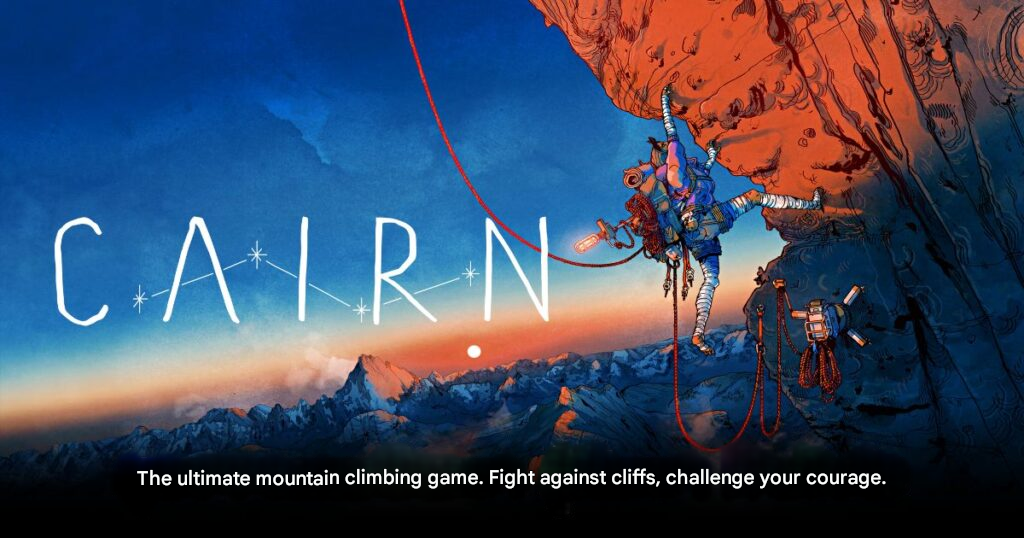
Cairn is a rare masterpiece that proves video games can still surprise us in entirely new ways. Instead of power fantasies or endless combat, Cairn turns mountain climbing itself into the core challenge. You play as Aava, a determined climber attempting to conquer Mount Kami, a peak no one has ever successfully reached. What sounds simple on paper becomes one of the most intense, nerve-wracking, and emotionally rewarding experiences in modern gaming.
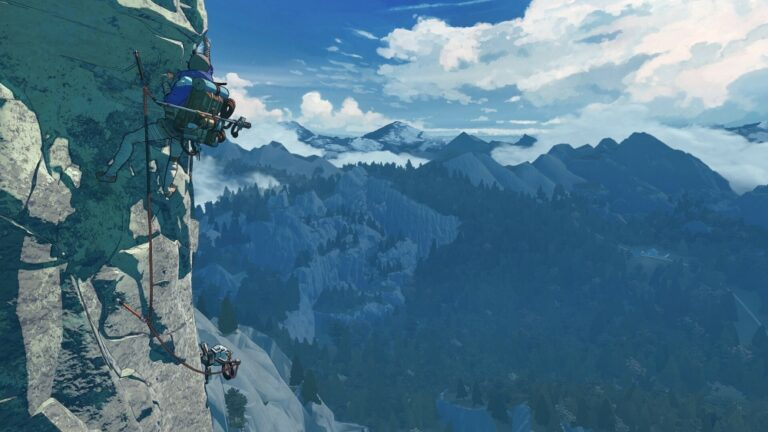
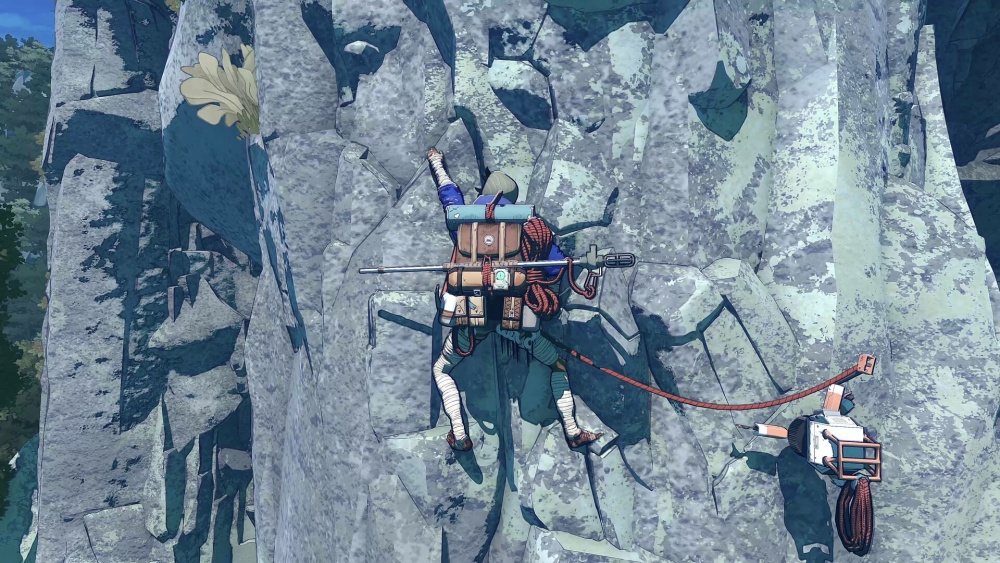
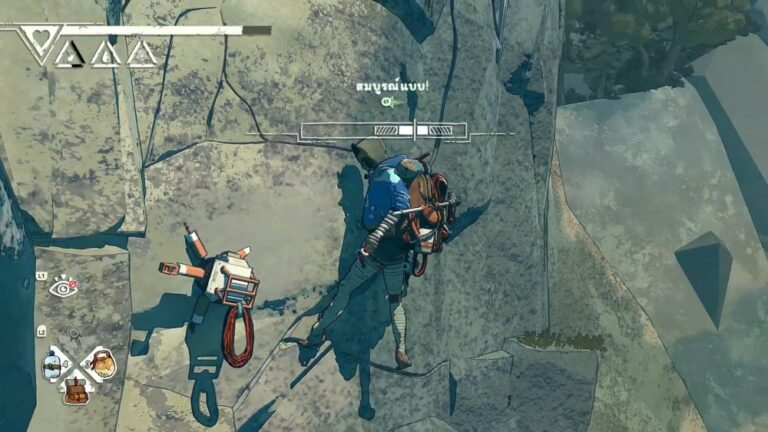
The heart of Cairn lies in its climbing system. Unlike traditional games that highlight safe handholds or rely on scripted paths, Cairn gives you full control over each limb. Every hand and foot must be placed manually, forcing you to constantly assess balance, weight distribution, and surface texture. The game never tells you where it is safe to climb. Instead, physics decides whether the rock can hold you, and one bad decision can undo minutes or even hours of careful progress. Every successful grip delivers a rush of relief that few games manage to replicate.
Climbing is only part of the challenge. Cairn is equally a survival game, demanding constant management of hunger, thirst, fatigue, and body temperature. Food and water must be rationed carefully, while cold weather can cause shaking hands and poor control at the worst possible moment. Weather itself becomes an enemy. Rain makes surfaces dangerously slippery, strong winds threaten balance, and harsh sunlight accelerates dehydration. The mountain feels alive, indifferent, and unforgiving, forcing you to learn patience rather than brute force.
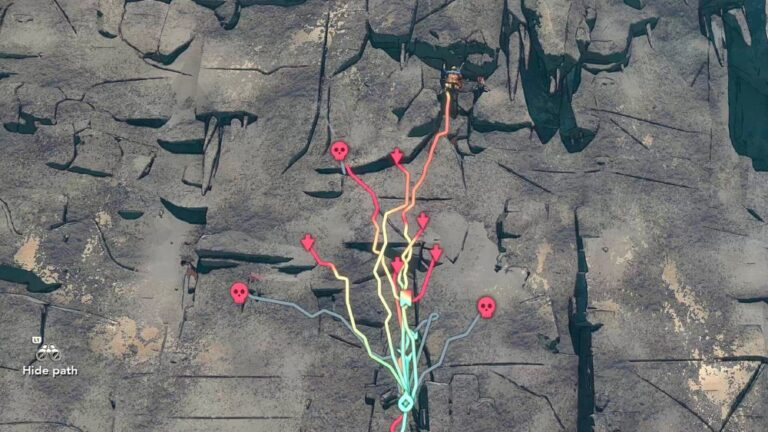
Failure in Cairn is not punishment, but education. Falling is expected, and often necessary, to understand which routes are viable and which are traps. The game quietly teaches that rushing is the real enemy. Every fall reinforces the importance of observation, restraint, and emotional control. This philosophy makes Cairn feel less like a traditional game and more like a mental endurance test, where mastering yourself matters as much as mastering the mechanics.
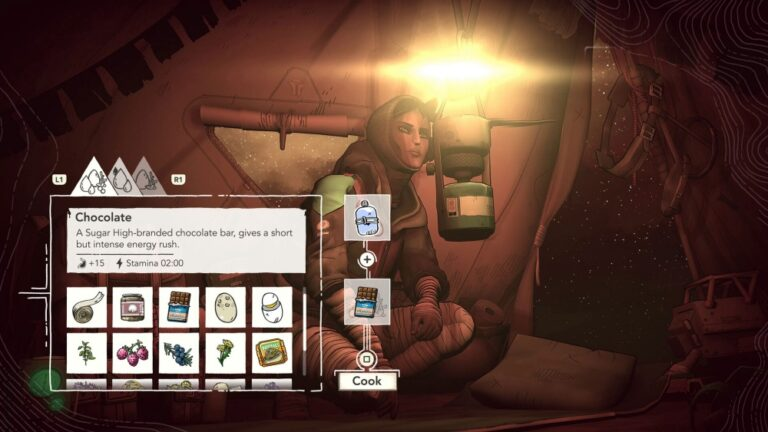
Equipment plays a crucial supporting role. Pitons allow you to create safety points, preventing total disaster after a mistake, but they are limited and fragile, forcing careful decision-making. Chalk improves grip when surfaces become unreliable, while food buffs can temporarily enhance stamina, balance, or resistance to cold. Used wisely, these tools can turn near-impossible climbs into manageable challenges, but misuse often leads to costly consequences.
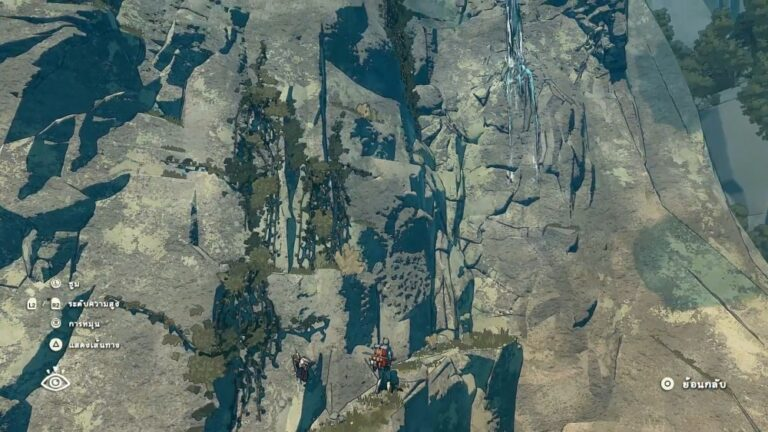
Cairn’s emotional strength comes from its presentation. The minimalist art style strips away unnecessary detail, allowing vast landscapes and sheer cliff faces to dominate the screen. Sound design is restrained and powerful, relying on wind, breath, and silence rather than constant music. This design choice reinforces isolation and heightens immersion, making each climb feel deeply personal. The story unfolds subtly through environmental details, letters, and scattered notes, inviting players to piece together Aava’s motivations rather than spelling them out.
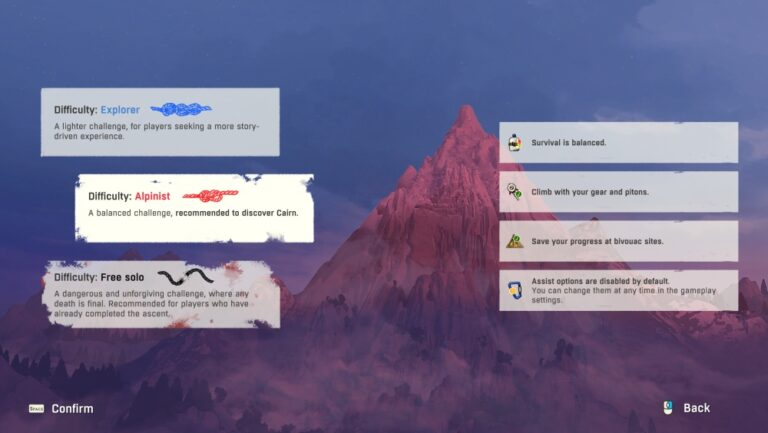
Accessibility is thoughtfully handled through difficulty options. Explorer mode offers a more relaxed experience with generous assistance and safety nets, ideal for players seeking calm exploration. Alpinist mode delivers the intended balance of tension and challenge, while Free Solo removes nearly all safety features, offering a single-life experience that demands absolute precision and mental focus. Each mode reshapes the emotional tone without compromising the game’s identity.
For players who prefer localized text, a community-made Thai language mod is available through Nexus Mods. While partially AI-translated and imperfect in places, it significantly improves readability for documents and notes, making the narrative elements easier to follow for those who need it.
Cairn is not about speed, score, or spectacle. It is about presence. It rewards patience, humility, and respect for the mountain. Whether played in short sessions or long climbs, the experience remains consistently gripping, offering a rare blend of stress and serenity. With an average playtime of around 12 to 15 hours, Cairn never overstays its welcome, delivering a perfectly paced journey that lingers long after the final ascent.
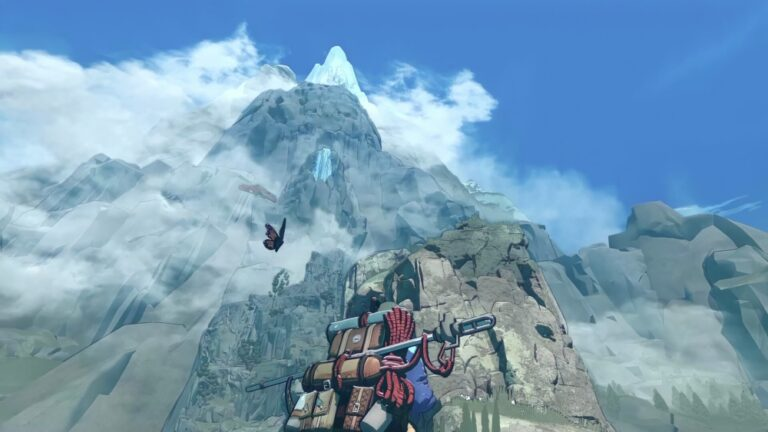
Available on PC via Steam and PlayStation 5, Cairn stands as one of the most unique survival experiences in recent years. If you are searching for a game that challenges both your hands and your heart, this climb is absolutely worth taking.