Samsung Galaxy S26 Benchmark Leak Reveals Exynos 2600 Performance Rivaling New Snapdragon Chips

The smartphone industry is heating up once again following a new leak surrounding the Samsung Galaxy S26, which reveals early performance data for Samsung’s next-generation Exynos 2600 chipset. Built on a cutting-edge 2nm process, the Exynos 2600 is expected to be the world’s first commercially available 2nm mobile chip, and early Geekbench results suggest that its GPU performance is far more competitive than many expected.
According to the leak, the Exynos 2600 will be used in the Samsung Galaxy S26 and Galaxy S26 Plus models in select regions, particularly South Korea and Europe. One of the key highlights of this chipset is its advanced 2nm architecture, which promises improved power efficiency and thermal management. While mobile gamers have historically been cautious about Exynos performance, Samsung has repeatedly emphasized that it has integrated Heat Blocker technology directly into the chip to reduce overheating during intensive workloads.
When compared to the OnePlus 15 powered by the Snapdragon 8 Elite Gen 5, which launches at a starting price of around 899 USD, the Xclipse 960 GPU inside the Exynos 2600 delivers encouraging results. In Vulkan benchmarks, the GPU achieved up to 88 percent of the performance of the Adreno 840, while OpenCL scores reached nearly 80 percent. These figures are particularly notable considering the test unit is believed to be running pre-optimized software rather than a finalized retail build.
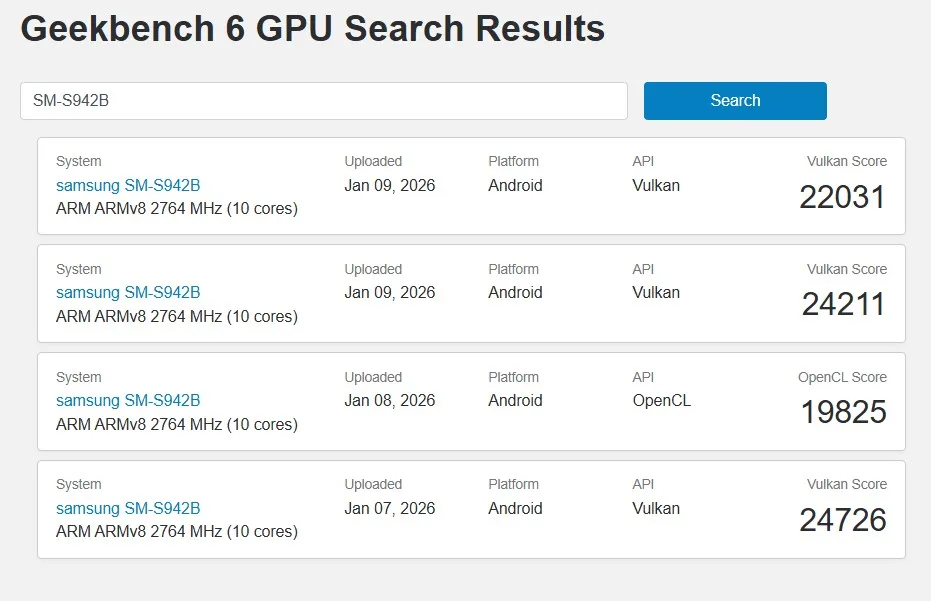
The Geekbench listing references a device with the model number SM-S942B, widely believed to be the global variant of the Samsung Galaxy S26. The benchmark data confirms a 10-core CPU configuration paired with the Xclipse 960 GPU, further strengthening the case that Samsung intends to rely on its in-house silicon for flagship devices in multiple markets instead of defaulting entirely to third-party chipsets.
Although the Exynos 2600 still trails the latest Snapdragon chip by a small margin, industry experts caution against drawing final conclusions at this stage. The Galaxy S26 remains weeks or months away from its official launch, leaving Samsung ample time to refine software optimization and thermal tuning. With further improvements, the performance gap could narrow significantly by the time the device reaches consumers.
Thermal stability and sustained performance remain critical challenges that Samsung must address to regain user trust in the Exynos brand. However, if the 2nm Exynos 2600 delivers on its early promise, it could mark a major turning point for Samsung’s flagship chipset lineup and restore Exynos as a serious contender in the premium smartphone segment.