Google Quietly Launches Desktop Camera App, Hinting at Android PC Future
Over the past weekend, eagle-eyed users discovered a new Google app called Desktop Camera on the Play Store, marking a very quiet launch. Designed for large-screen devices, the app is not yet compatible with any smartphones, tablets, or Chromebooks, fueling speculation that it may be part of Google’s rumored Android PC project, expected to debut in 2026.
Minimalist UI Inspired by Pixel Camera
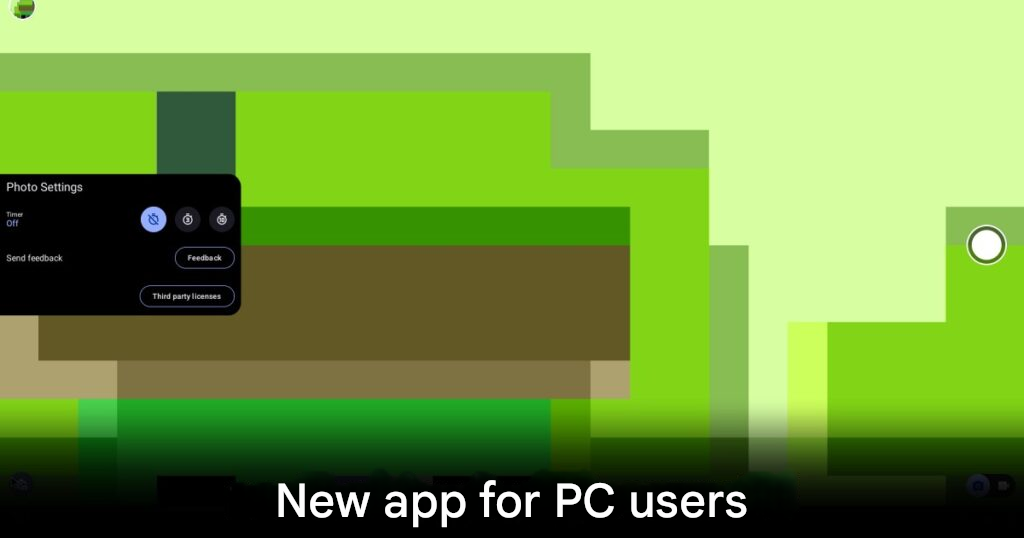
The app features a clean, minimal interface, reminiscent of the Pixel Camera. Users will find a shutter button on one side, a toggle between photo and video modes in the corner, and other settings neatly separated. While it is simplified compared to the mobile Google Camera, the design prioritizes basic camera functionality for desktop environments.
Screenshots reveal an interface similar to ChromeOS, including an app drawer and quick settings, but with notable differences like the removal of the top status bar. These changes align with leaked details of Aluminium OS, a new Google operating system that aims to merge Android with a full desktop experience.
Early Downloads and Future Android PC Integration
Despite limited device support, the app has already surpassed 1,000 downloads, suggesting Google is preparing for a new class of hardware—especially laptops running Android 16, optimized for multi-window use, mouse, and keyboard input. This positions Google to potentially compete with Windows in the PC market.

Seamless Experience and AI Integration
The Desktop Camera aims to deliver a seamless experience across devices, reflecting Google’s goal of unifying mobile and desktop usage. Google plans to leverage Gemini AI to enhance both photo and video processing, offering professional-level results even on standard hardware.
By quietly releasing this foundational app, Google signals that full Android PC functionality could arrive soon. Gamers and professionals looking for a mobile-powered yet PC-capable laptop might see compelling new options from Google in 2026.
Source: 9to5Google